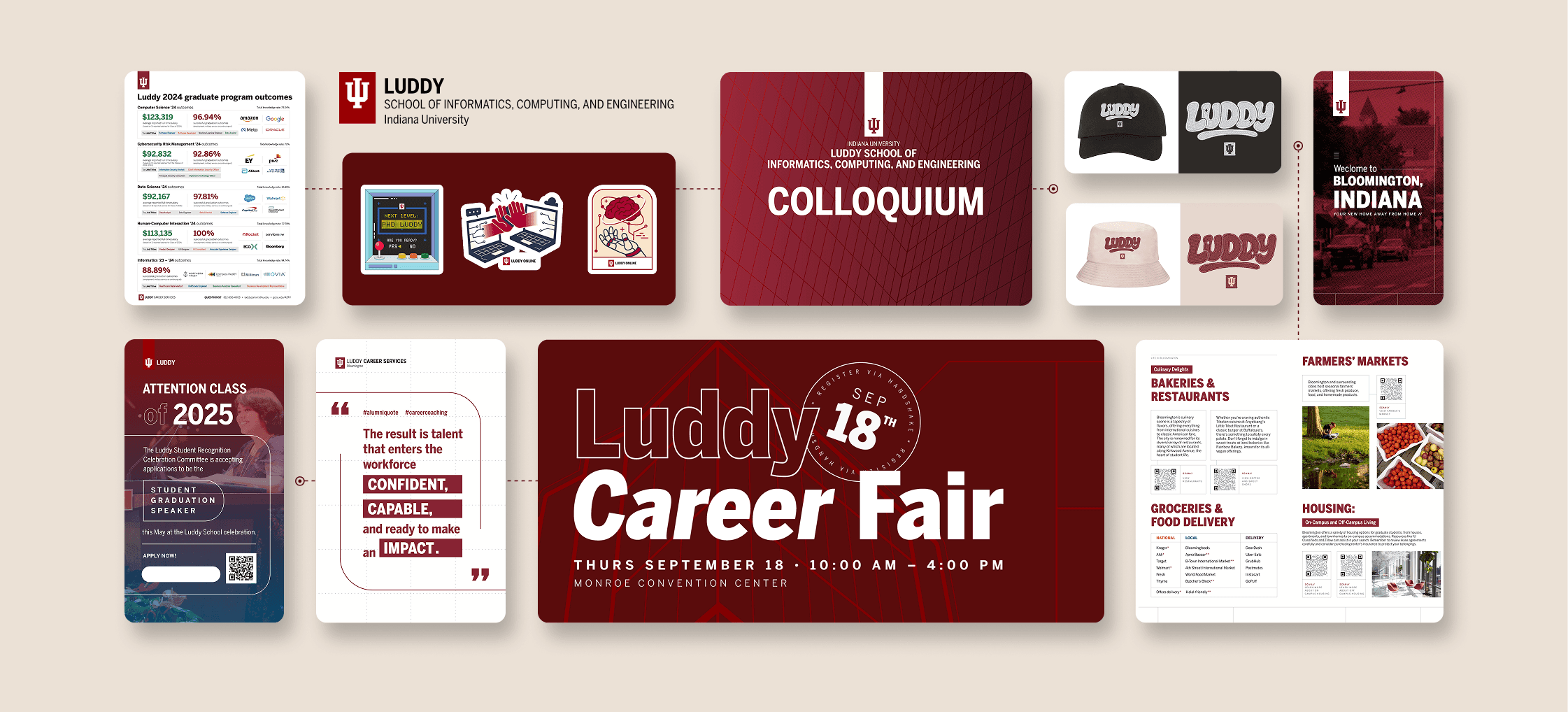
Multi Channel Communication and Visual Experience Design for Luddy
Transforming complex internal requests into clear, consistent, and student-centered visual communication across 15 campus touchpoints.
[My Role]
In-house Visual Designer
Product Designer
[Team]
Biheng
Luddy Marcomm Team
[Timelines]
[Type]
Communications
Marketing
[Impact]
15+ touchpoints unified
[Background]
As a school within Indiana University Bloomington, Luddy communicates a high volume of student-facing information across many channels every semester.
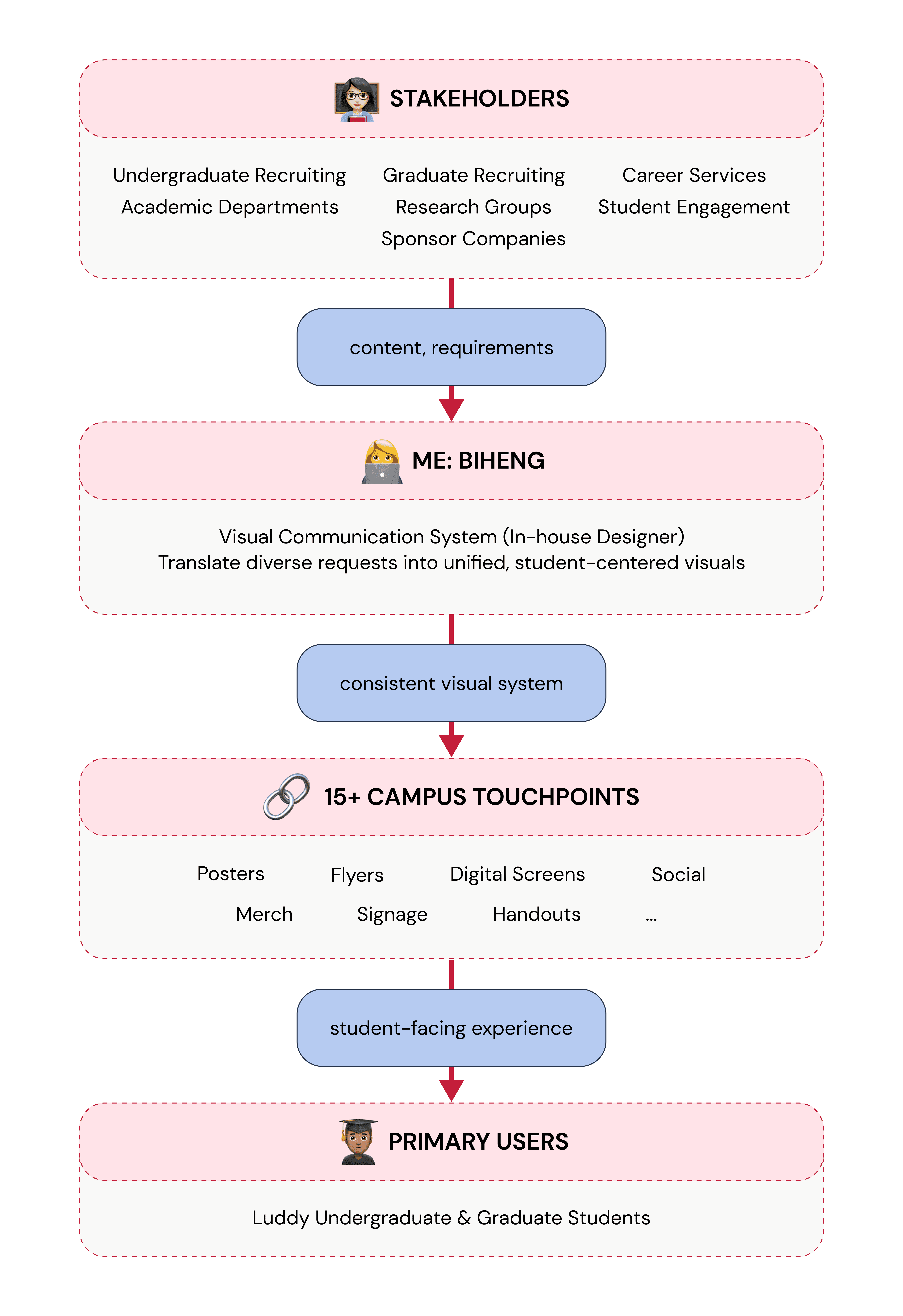
Luddy shares numerous events, resources, and opportunities with students each semester. These communications come from Recruiting, Career Services, Student Engagement, and academic departments. Because each team produced materials independently, the student-facing experience across these touchpoints became visually inconsistent and difficult to navigate.
[Problem]
15+ campus touchpoints delivered information in inconsistent ways, making it harder for students to understand and act on it.
Each team/department produced visual materials independently. The result was an inconsistent ecosystem that made it harder for students to understand and act on information.
[Goal]
Communication Goals
Improve readability and ease of understanding across student-facing materials
Restructure dense content into well-organized, scannable formats
Marketing Goals
Increase visibility and appeal of events, opportunities, and resources
Create visuals that motivate student interest and support recruitment efforts
Experience Goals
Build a cohesive multi-channel communication experience across campus
Ensure consistency across touchpoints so students can easily recognize Luddy communications
[Users and stakeholders]
[Constraints]
Brand Constraints
Indiana University official brand guidelines (Strict color and typography rules)
Need to balance creativity with institutional requirements
Stakeholder Constraints
Highly variable levels of design literacy
Mixed clarity of briefs
Different expectations for layout style and tone
Execution Constraints
High volume of diverse asset types
Multiple sizes and formats for each channel
Requirement to create reusable templates for teams
[Process]
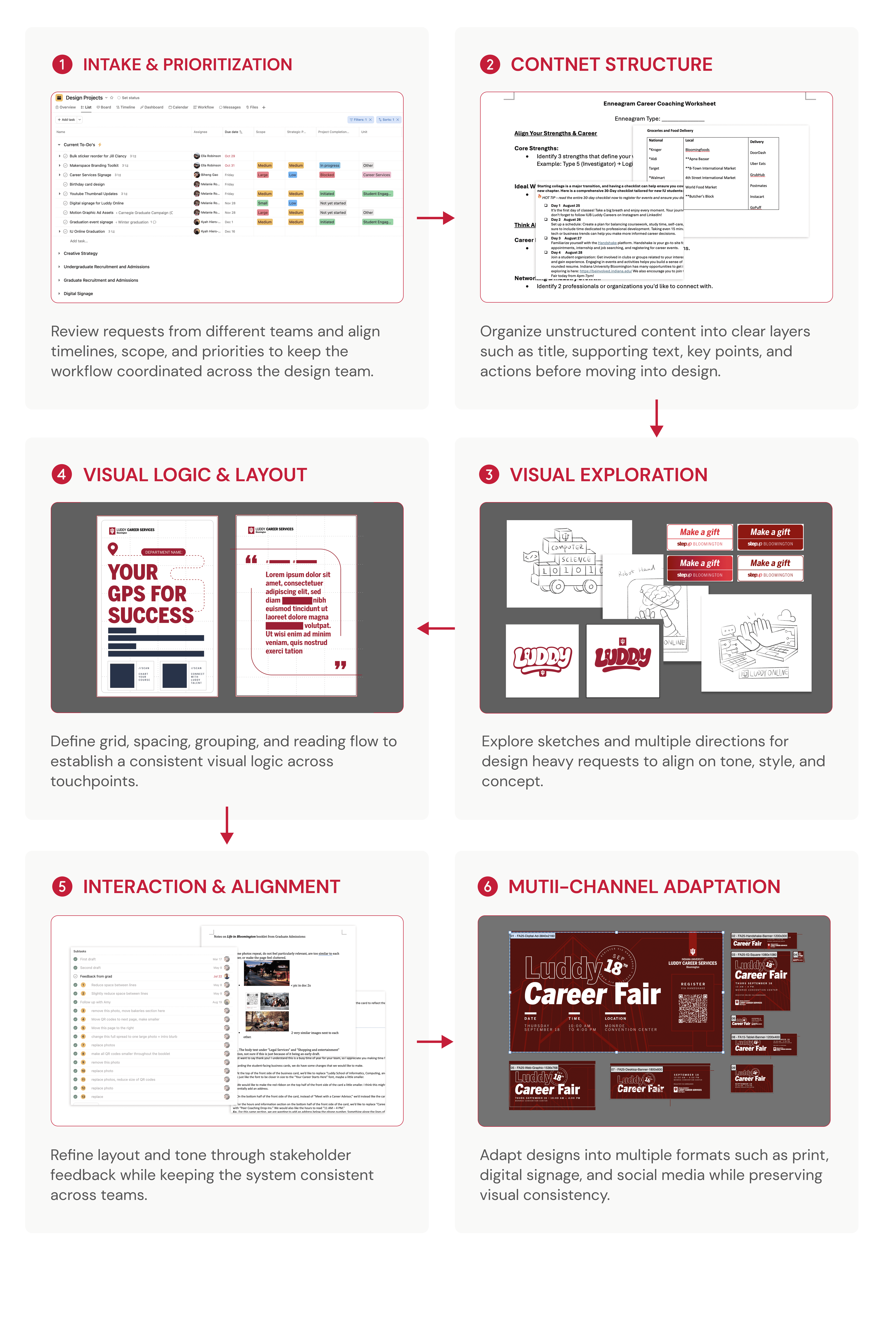
[Solutions]
A. Cross-Touchpoint Consistency
📌 Luddy Career Fair System
Pain points identified:
The event required many formats (poster, digital screens, social, recruiter guide), each with different size and readability constraints.
What I did:
I designed a modular system with a defined headline block, a flexible content area, and a consistent typographic rhythm that adapts across print and digital touchpoints while remaining visually unified.
Evidence:
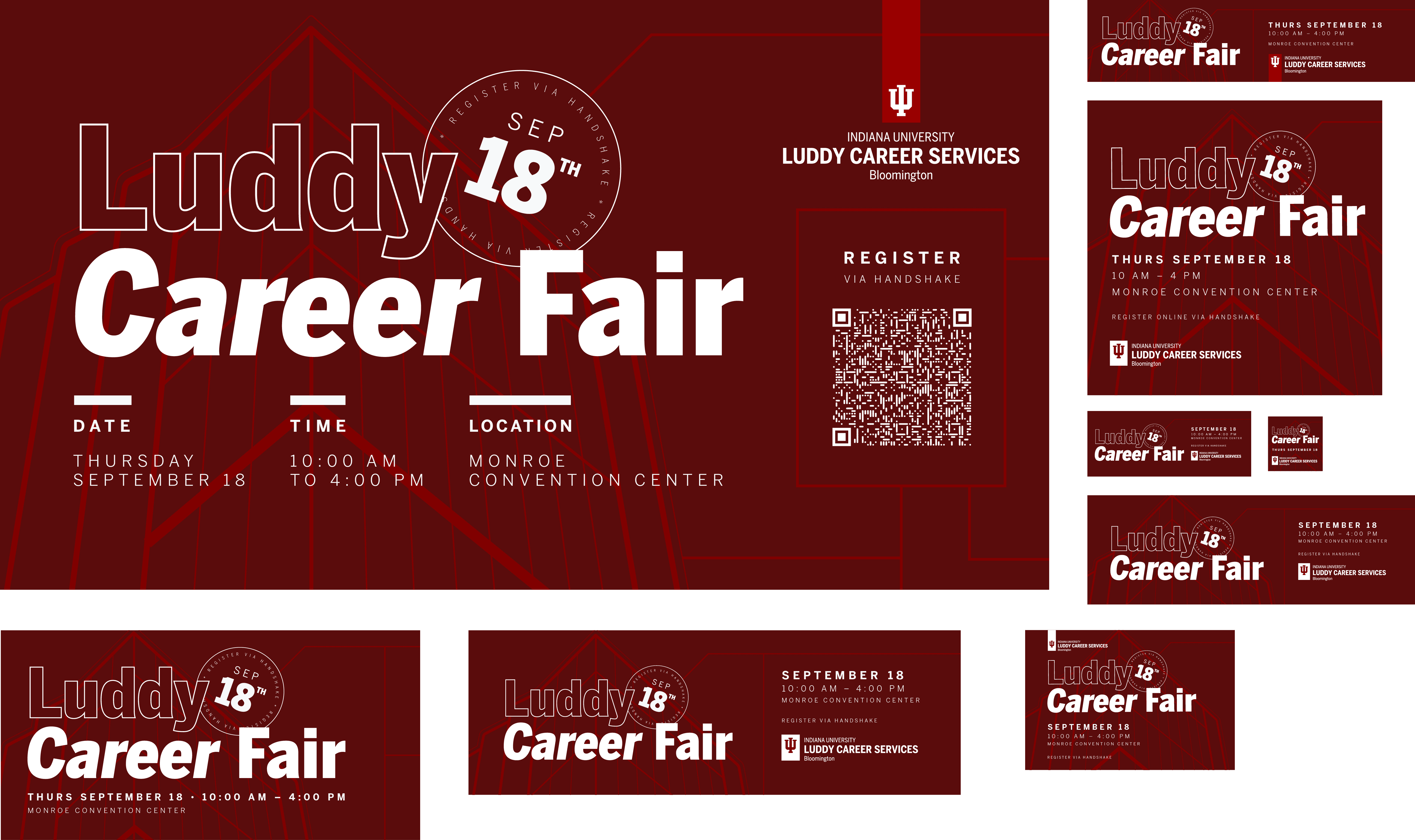
The same visual logic is applied consistently across landscape/portrait screens, posters, sinages and recruiter materials.
Digital Touchpoints
Digital signage and social graphics adapt the system into size sized with optimized hierarchy for quick scanning.
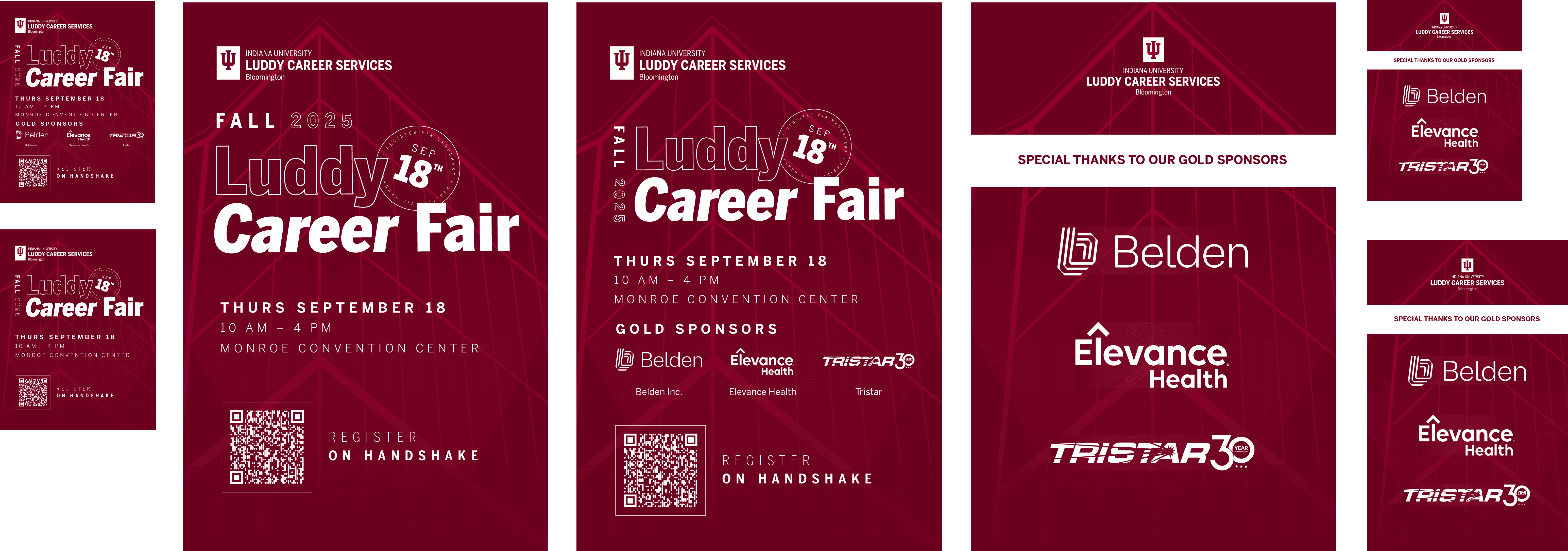
Print Touchpoints
Digital signage and social graphics adapt the system into size sized with optimized hierarchy for quick scanning.
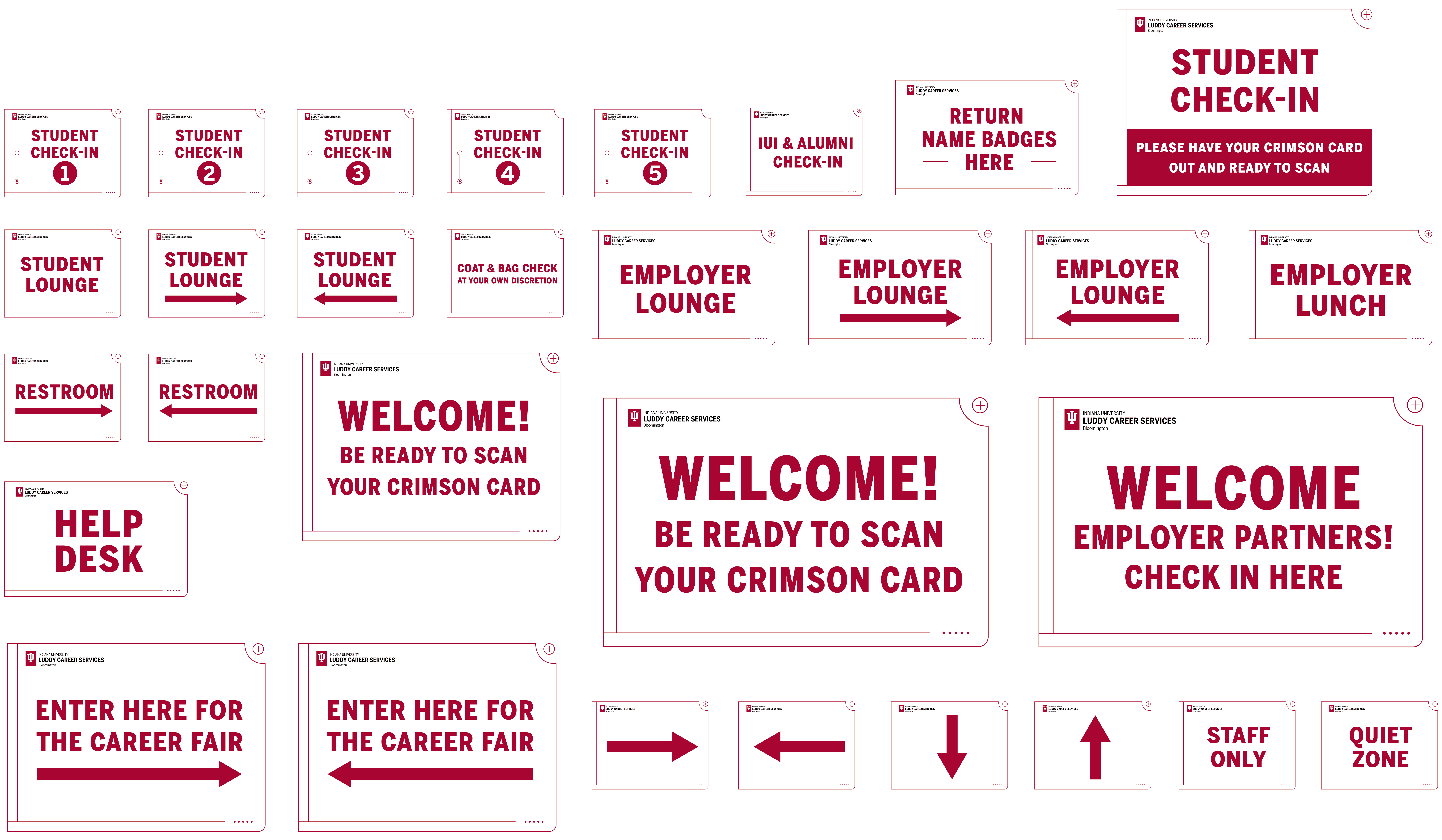
Event Signs
Digital signage and social graphics adapt the system into size sized with optimized hierarchy for quick scanning.
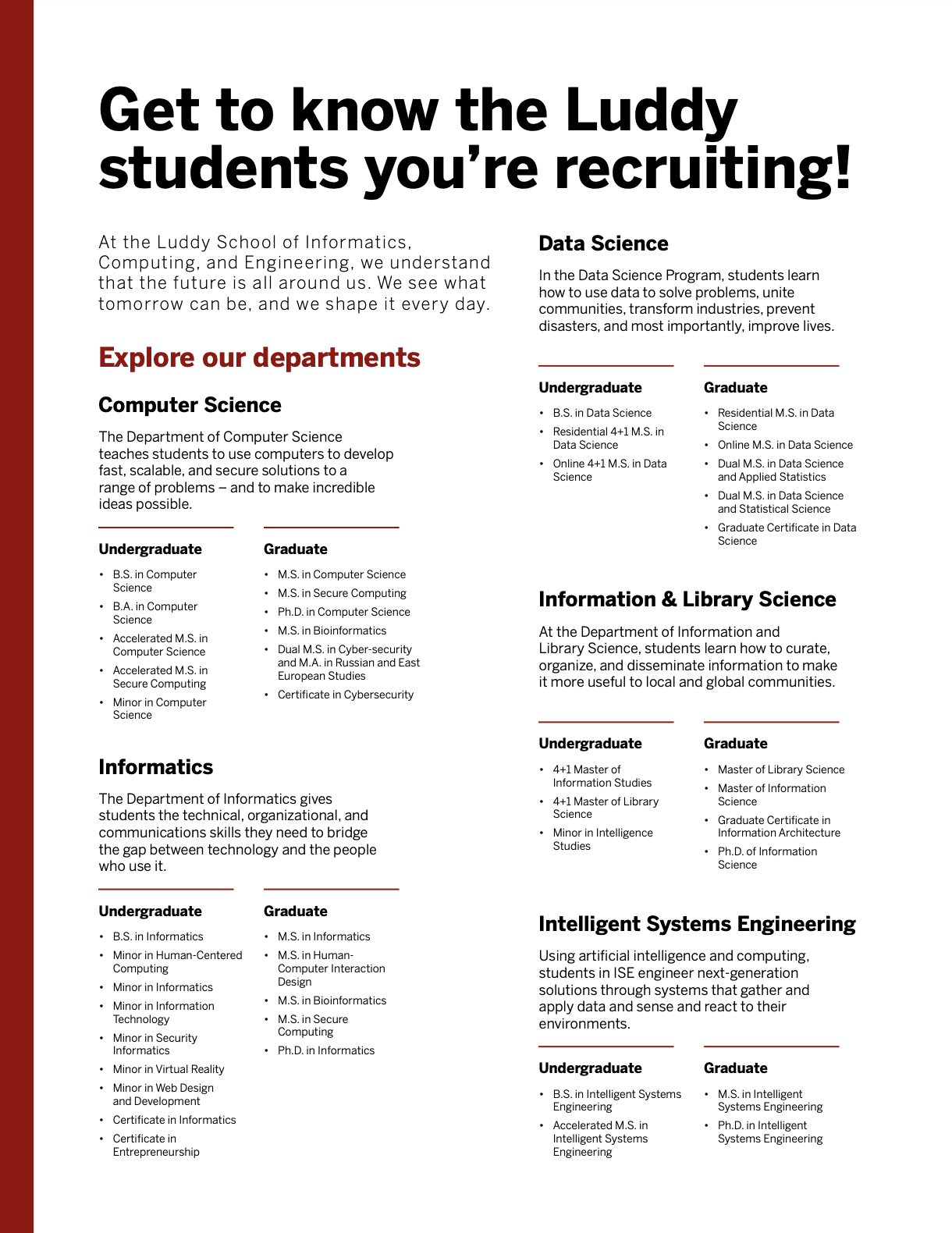
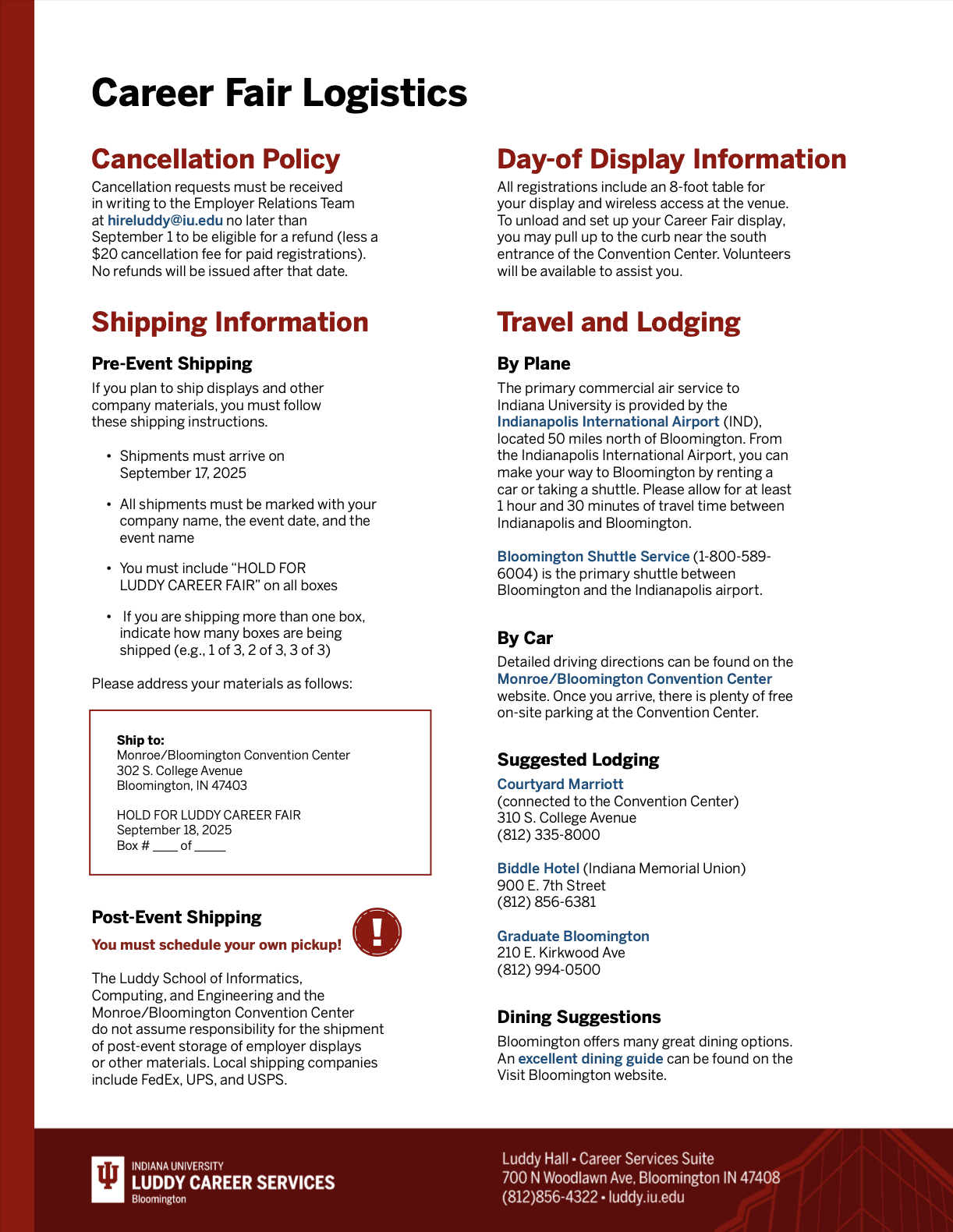
Recruiter Materials
The recruiter guide uses the same system with a content-first structure that supports navigation, instructions, and event logistics for external partners.
Impact
The unified system improved recognizability across touchpoints, reduced revision cycles across internal teams, and made both student and recruiter materials feel more polished and cohesive.
The system can also be reused for future fairs without rebuilding layouts from scratch.
B. Improving Information Readability
📘 Life in Bloomington Guide
Pain points identified:
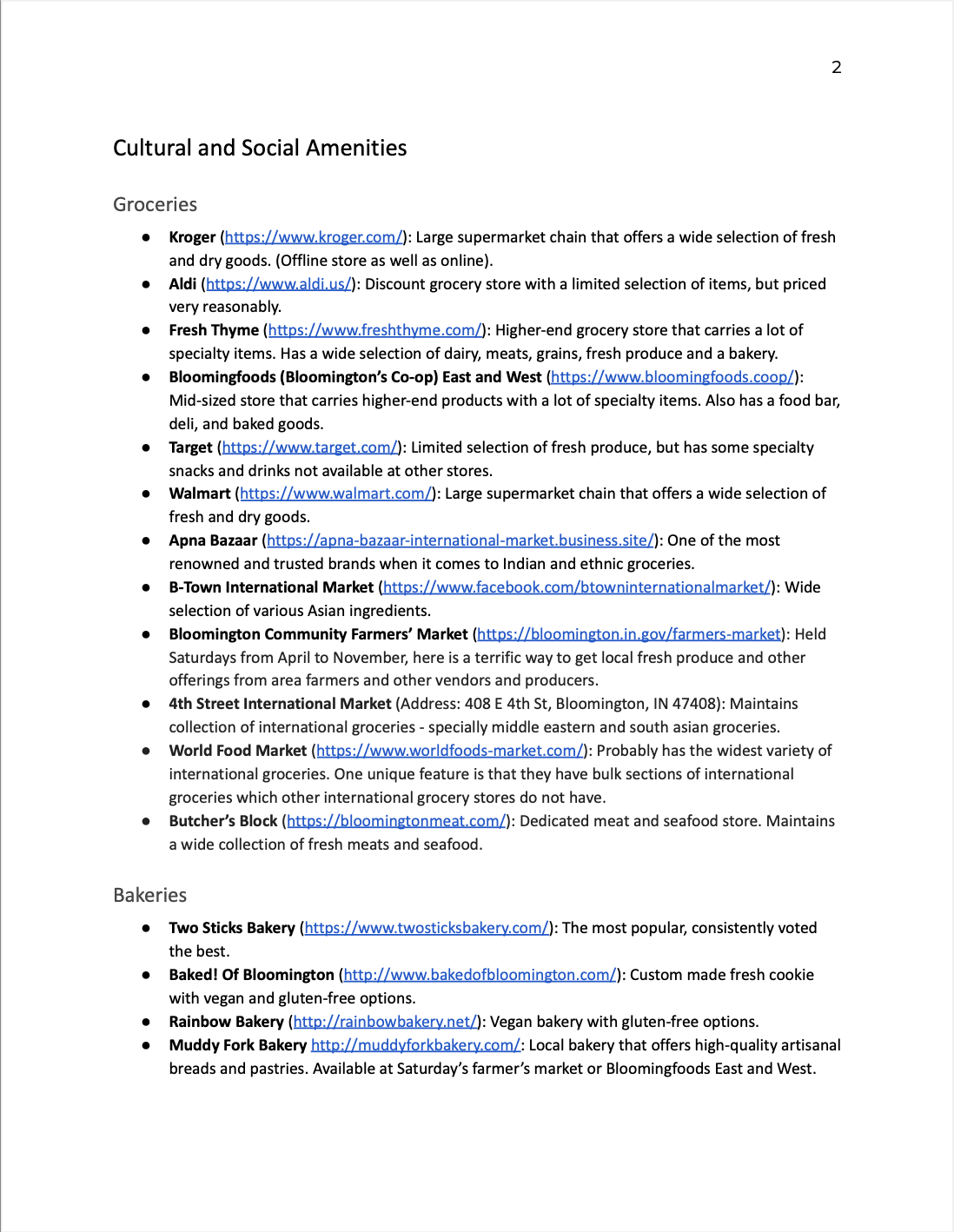
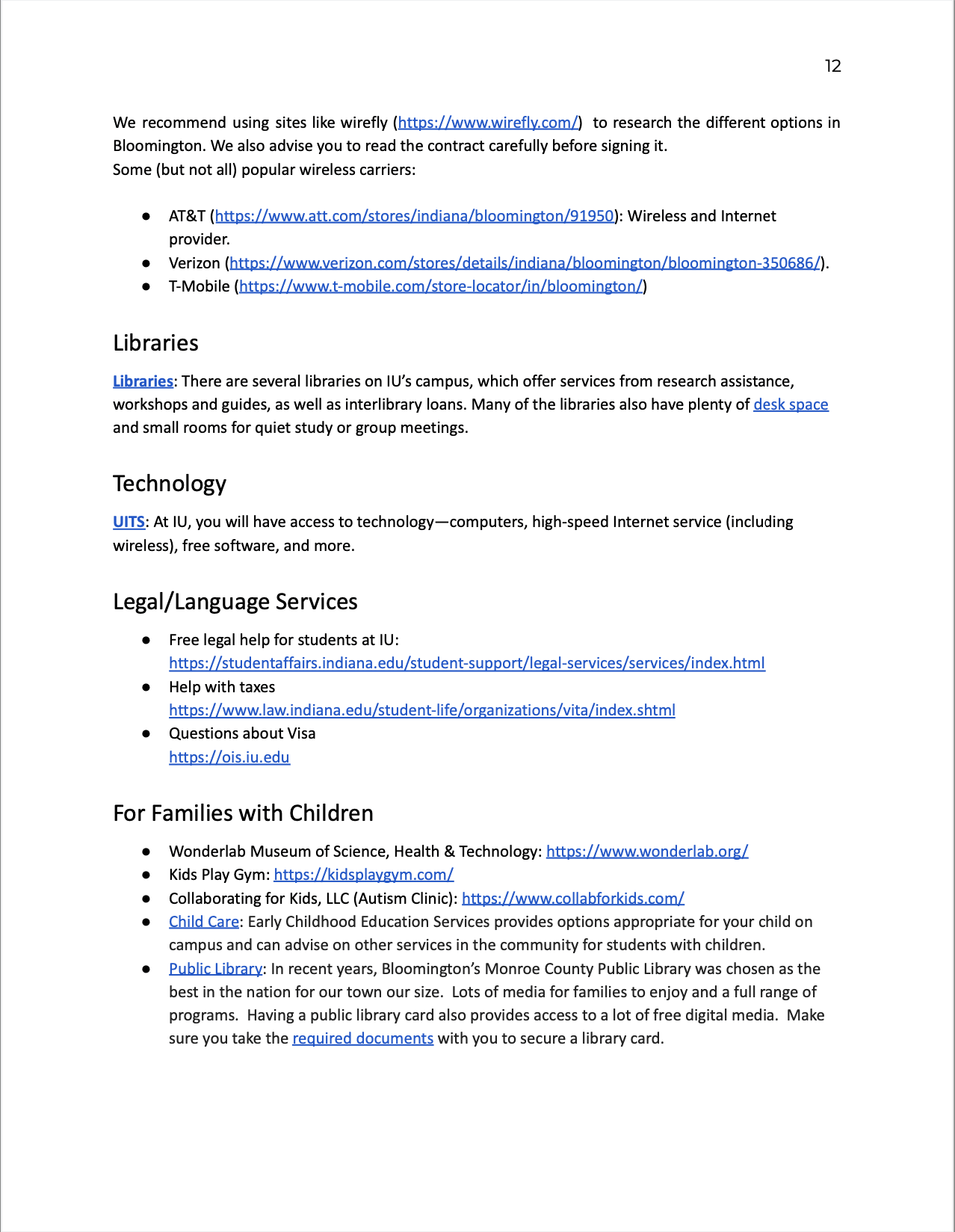
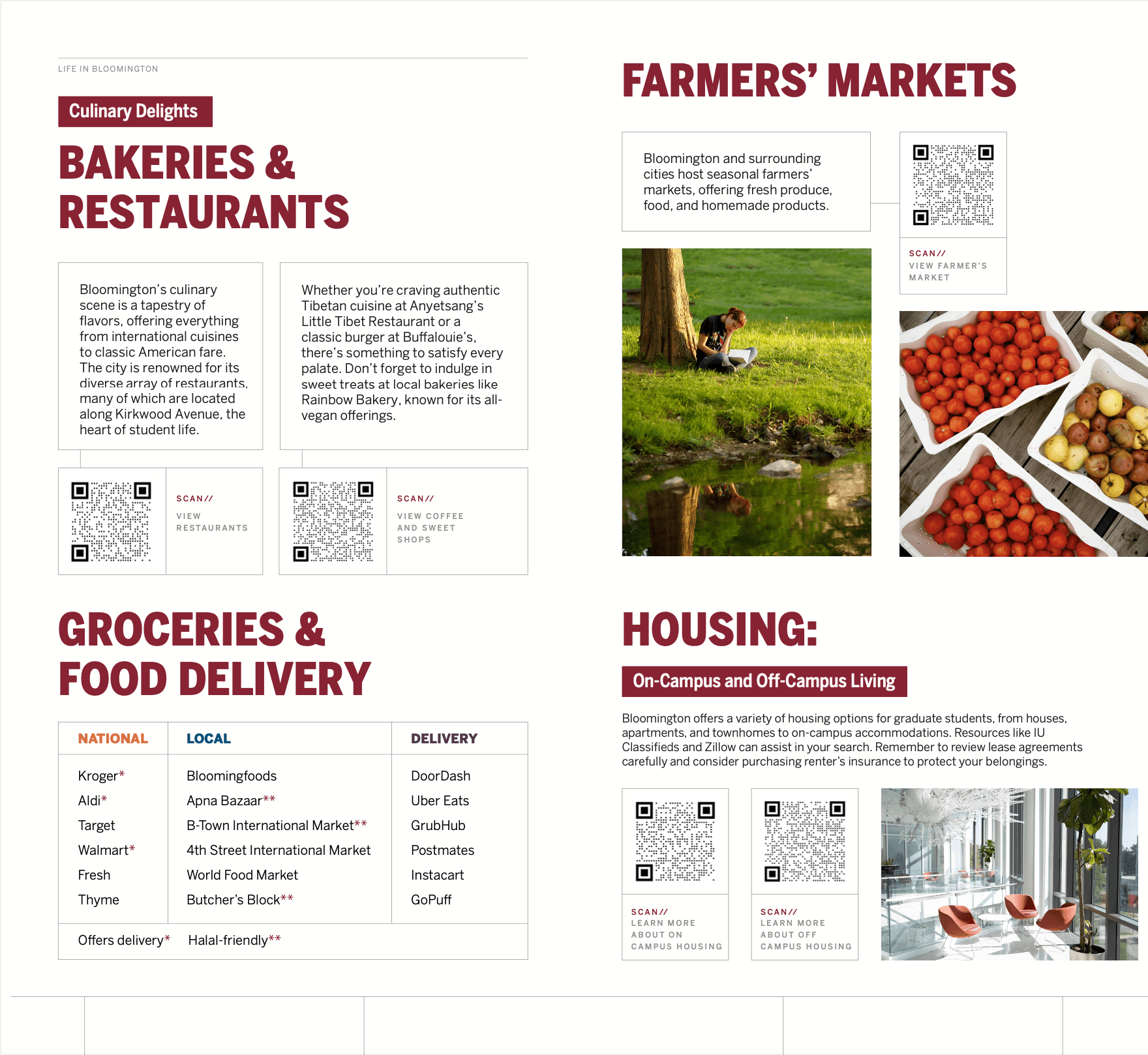
Raw content arrived as long, unstructured paragraphs with no hierarchy or visual anchors.
What I did:
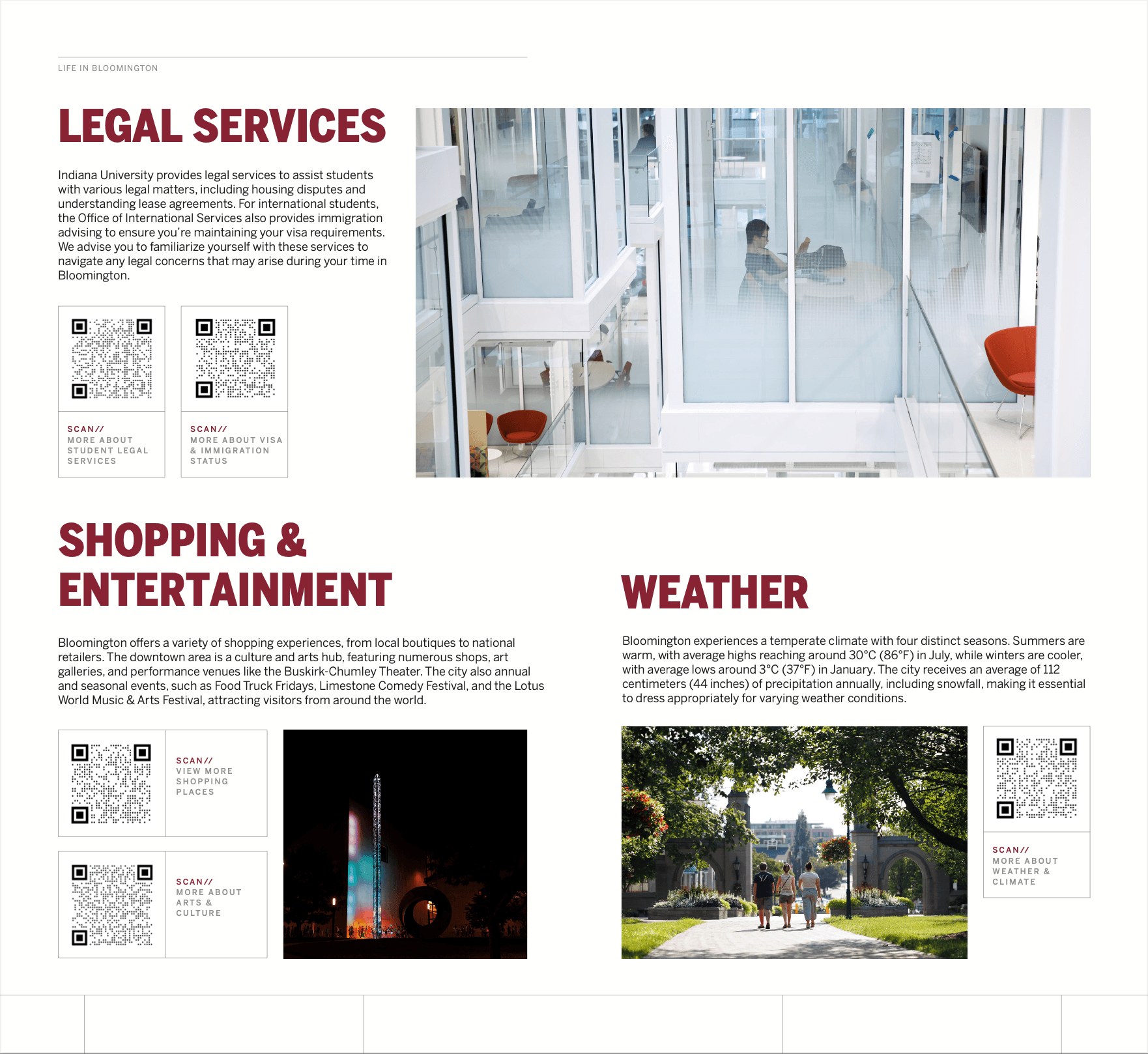
Reorganized content into a consistent structure (headers, icons, short descriptions, QR anchors) and applied a predictable page logic across all sections.
Evidence:
Final pages show consistent layout patterns, iconography, and scannable blocks for categories such as housing, transportation, and wellness.
Before
The original content arrived as long, unstructured text blocks with inconsistent hierarchy and no visual cues, making it difficult for students to quickly scan or locate key information.
After
Reorganized the content into a clean, structured layout by extracting only the most relevant information and presenting it with clear hierarchy, icons, and consistent page patterns.
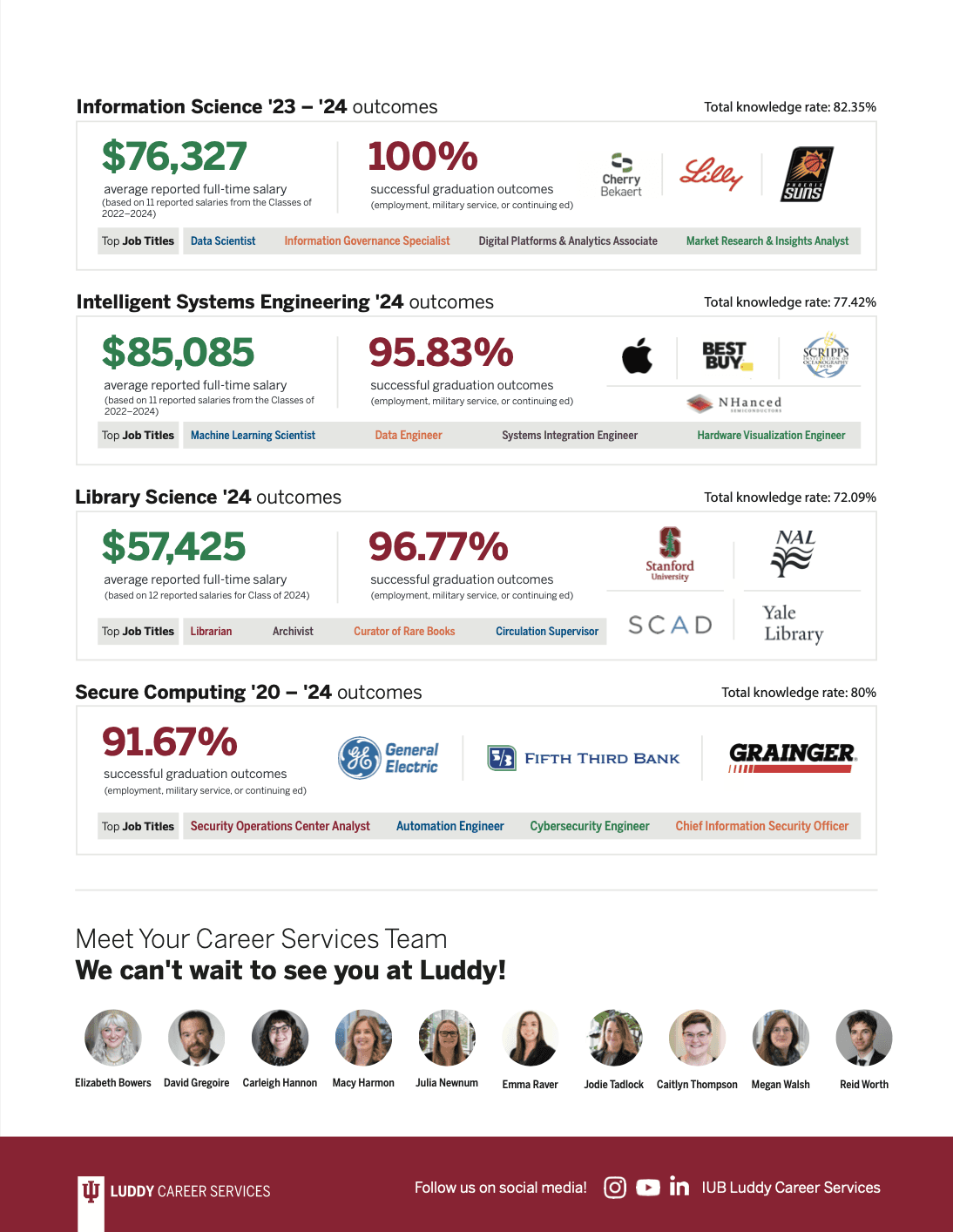
📊 Graduate Program Outcomes
Pain points identified:
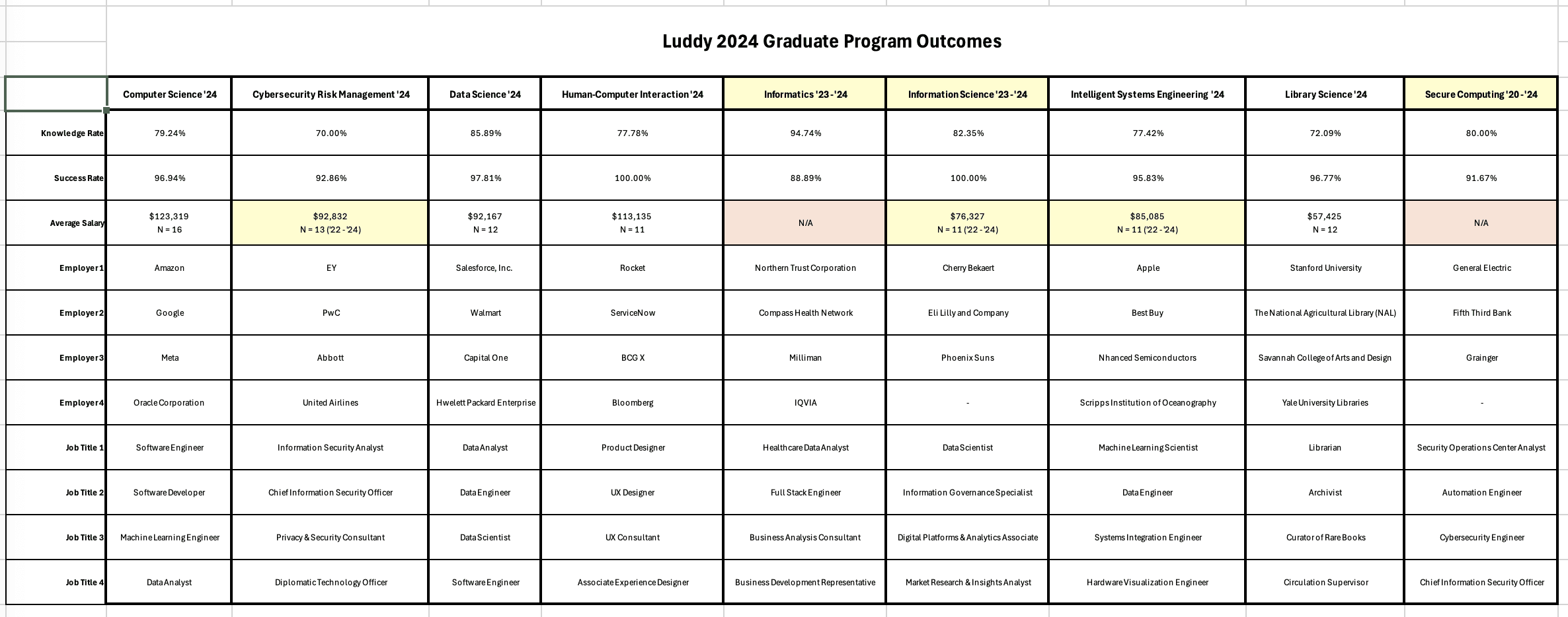
Career Services provided salary, outcome, and job title data for each major with no clear priority or visual system.
What I did:
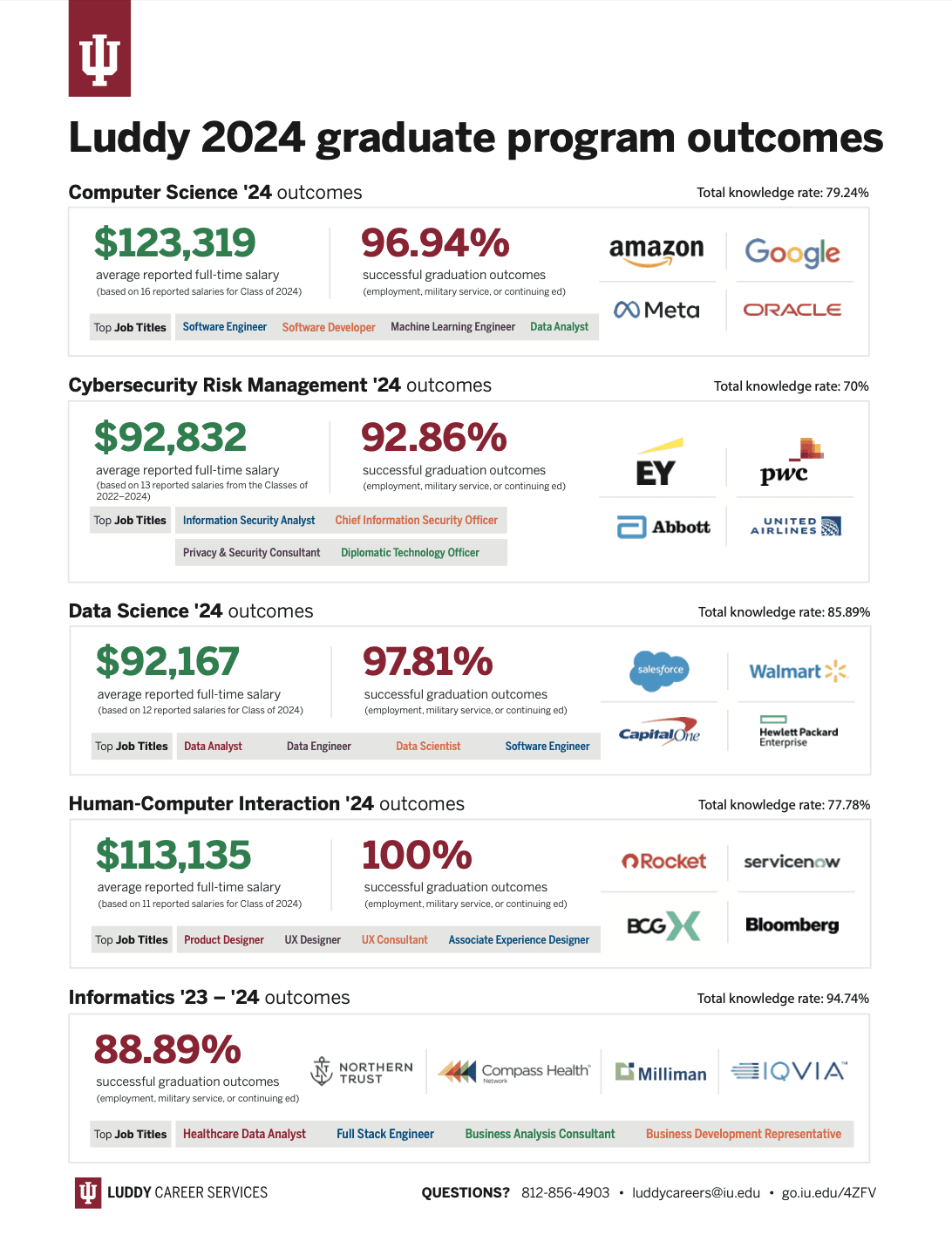
Built a hierarchy layout that highlights key numbers, organizes job titles into structured blocks, and applies a unified grid across majors.
Evidence: Pages display consistent modules for salary, successful outcomes, and job titles, with bold typographic emphasis for top metrics.
Before
The original data was presented in a wide spreadsheet with equal visual weight for every row and column, making it difficult to identify key metrics such as salary, success rate, and job titles.
After
I designed the data into a set of modular outcome cards that highlight the most important metrics, so students can quickly understand career paths across majors.
C. Engagement & Recognition
⭐ Sticker System
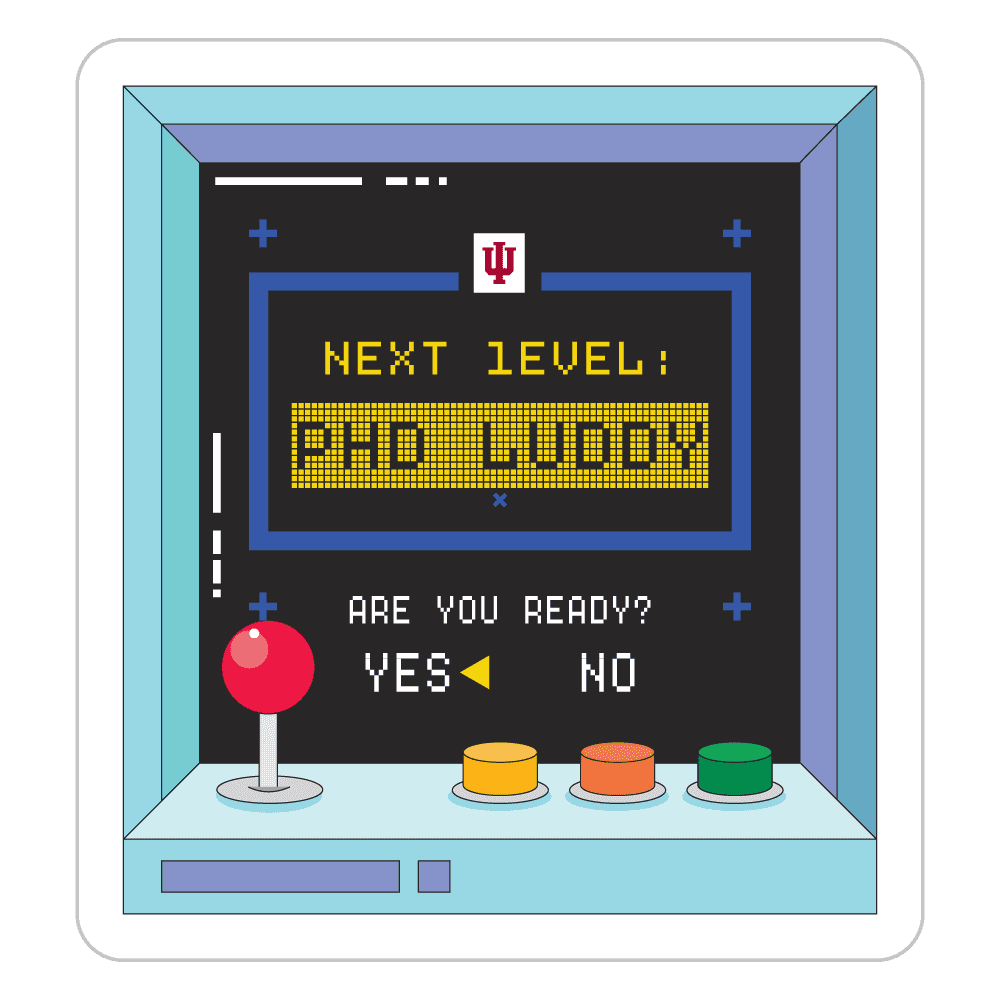
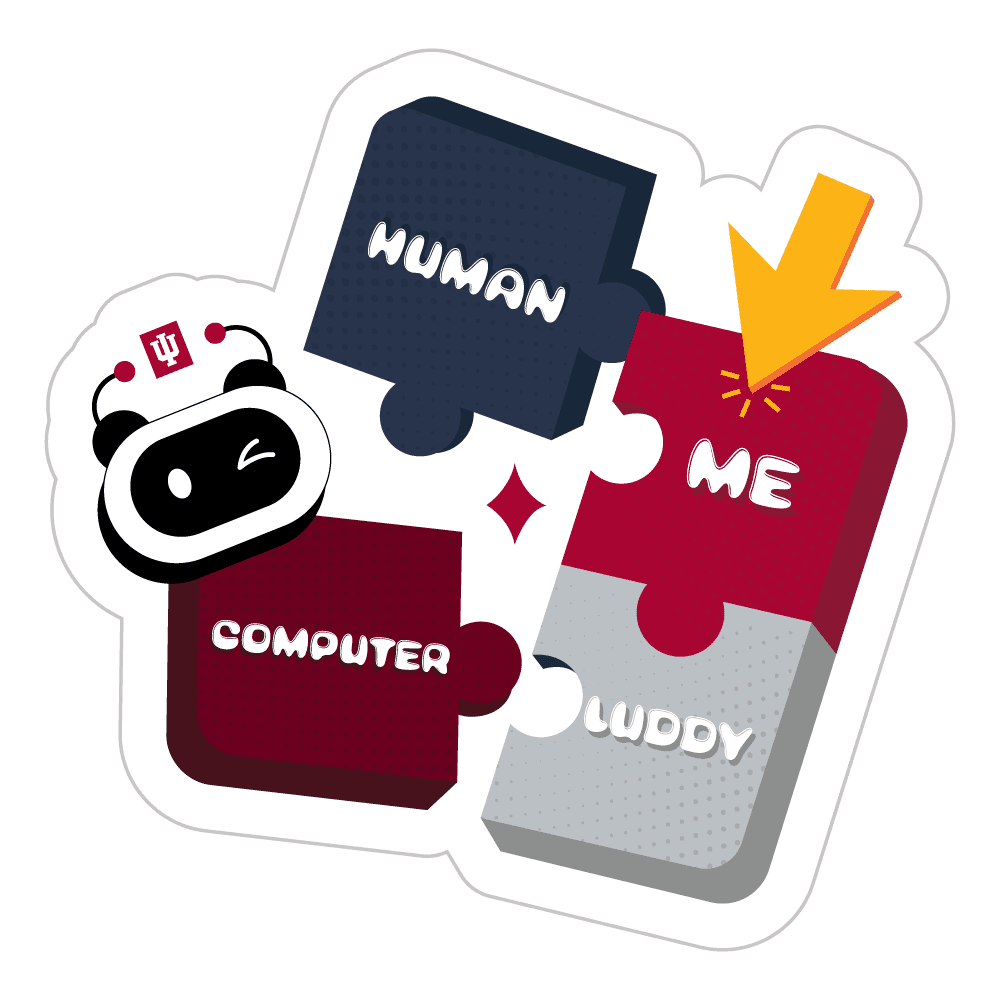
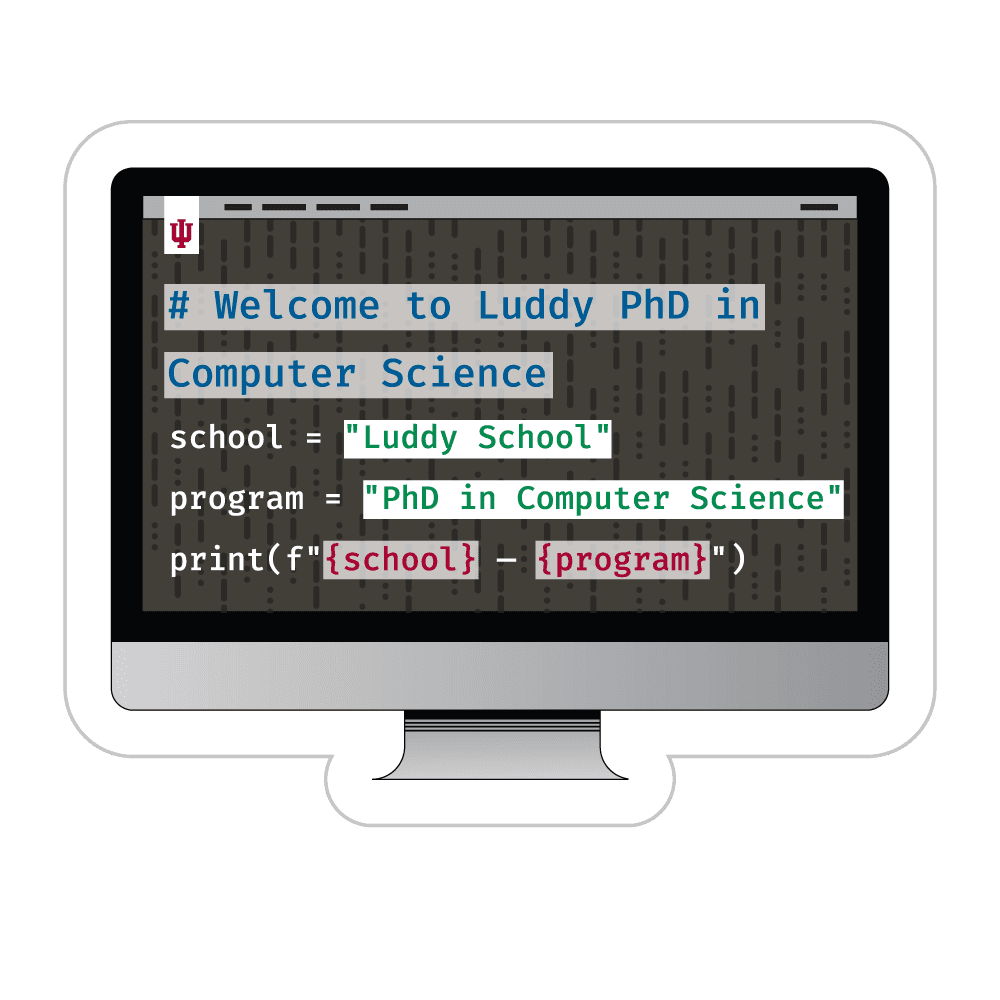
Extending the Luddy brand into a creative and program-specific sticker series
Concept:
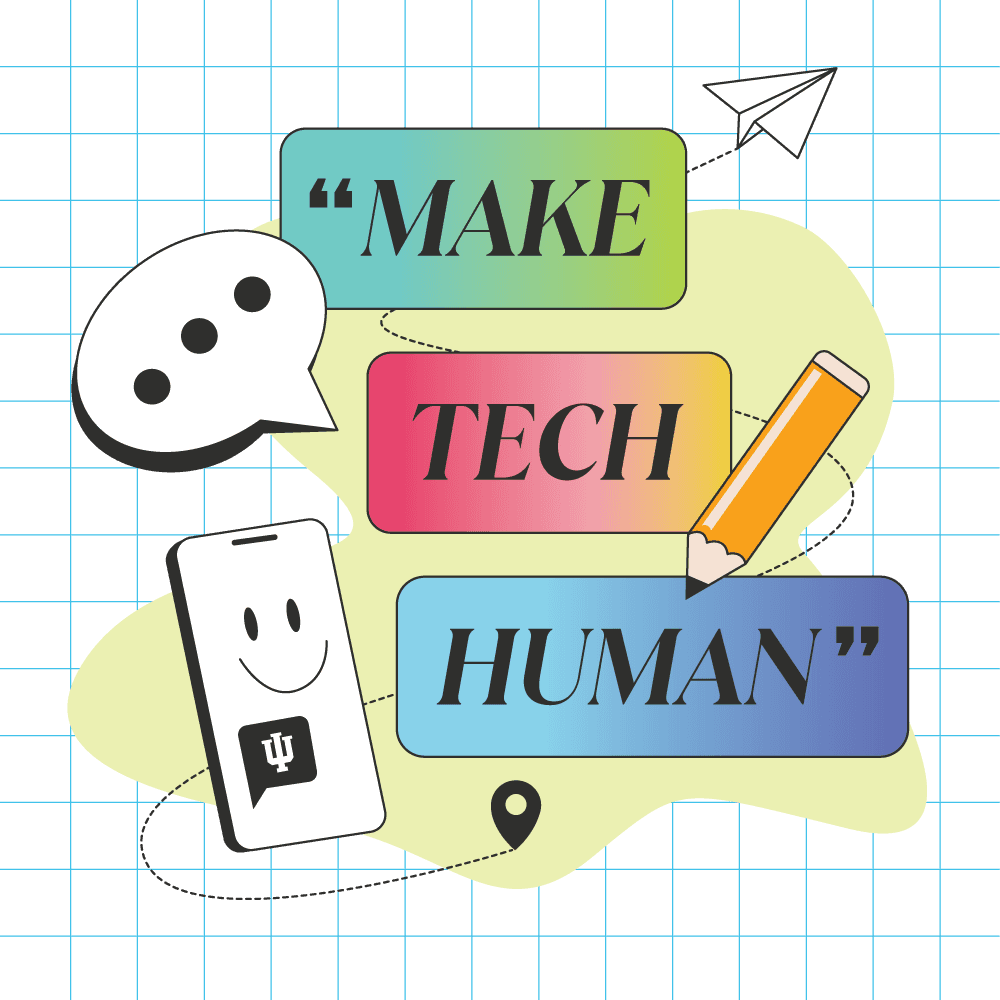
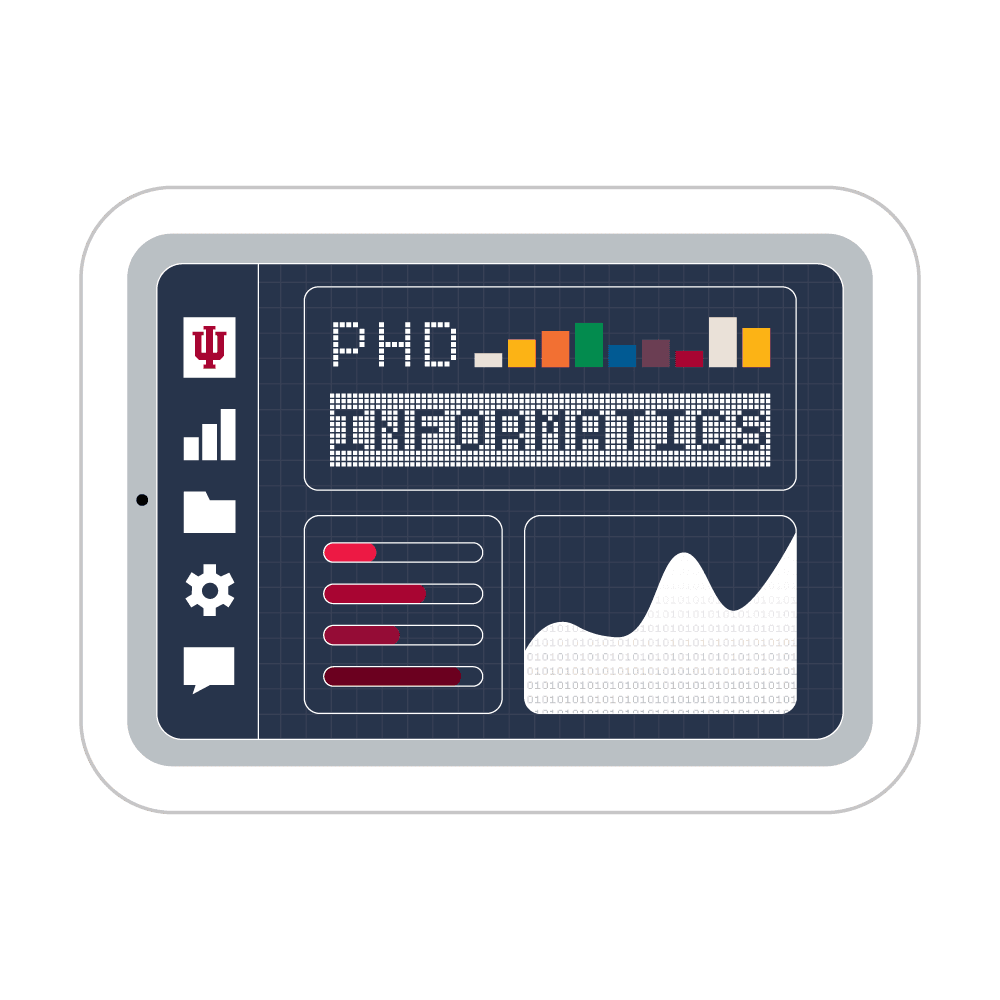
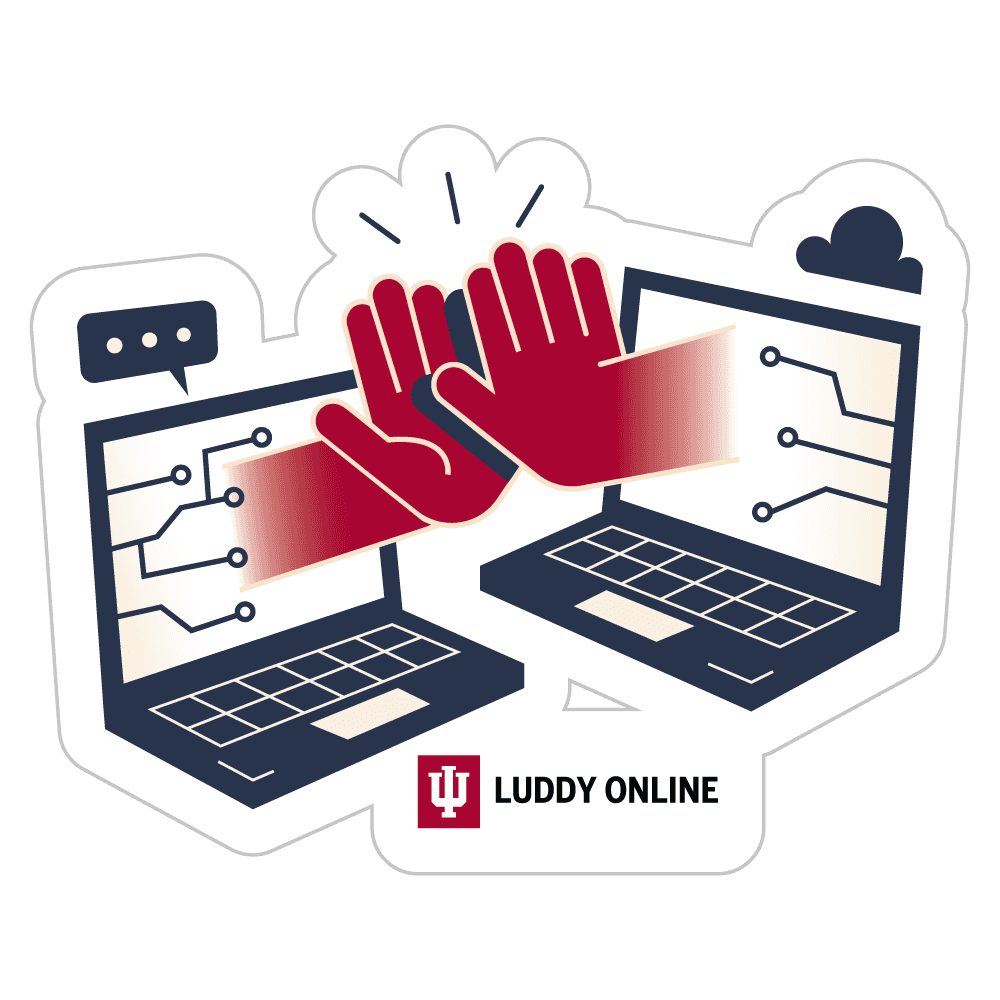
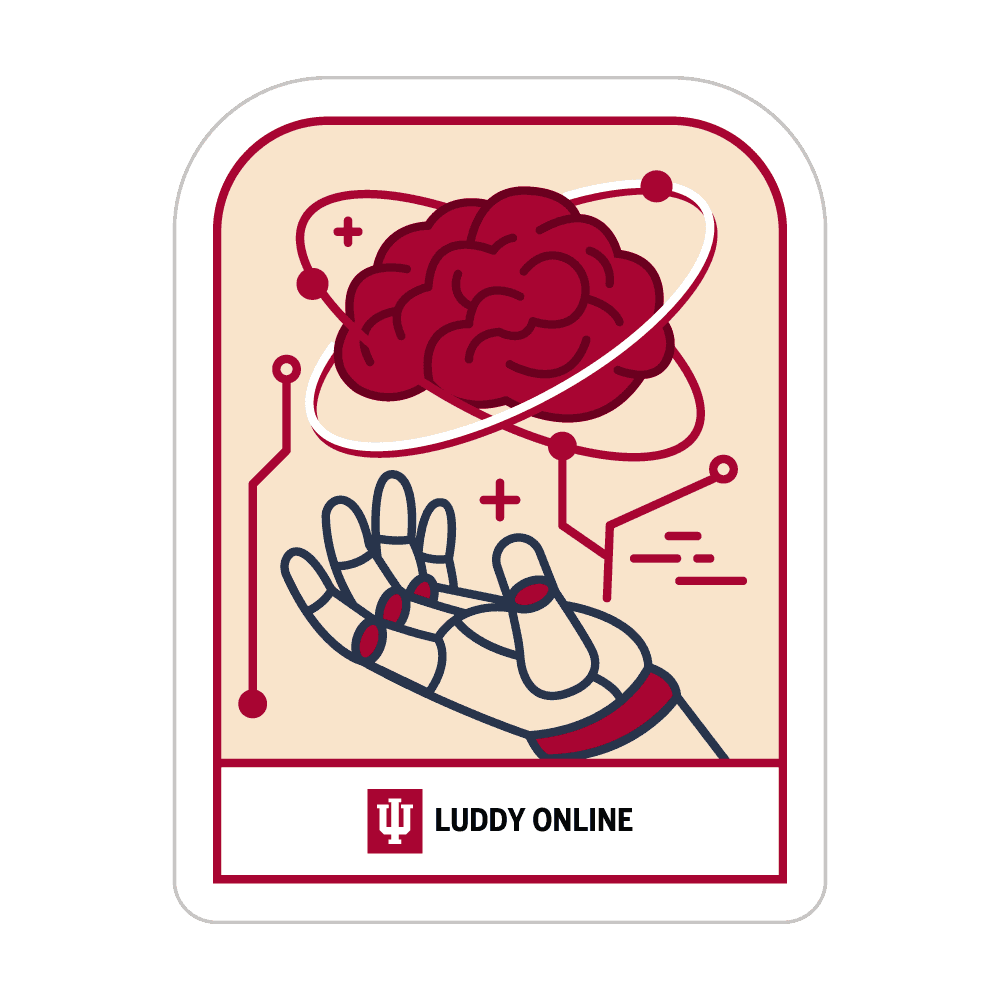
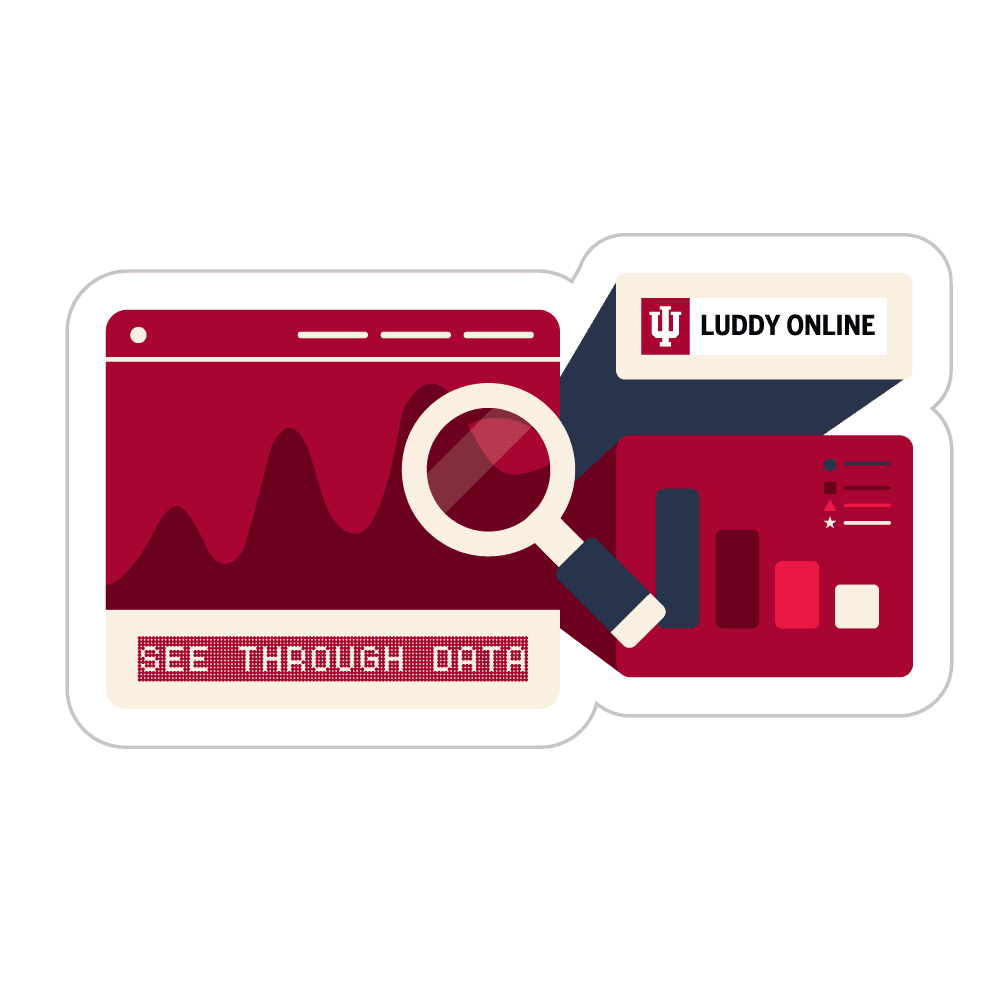
Luddy needed a sticker collection that could represent multiple departments while speaking to the identity and culture of each program. The system had to be flexible enough to support different academic programs yet consistent enough to feel part of the same school-wide brand.
System Approach:
I created a modular illustration system that uses shared linework rules, controlled color palettes, and consistent framing shapes. Each sticker expresses the personality of its department. Despite their variety, all stickers follow the same visual structure so the set feels unified when distributed together.
Outcome:
The stickers were produced and distributed at orientation, tabling events, and virtual engagement activities. Students collected them across programs, creating recognition and connection between different academic communities.
Sticker Collection 👇
🧢 Bucket Hat and Cap Design
Extending the Luddy visual personality into wearable merch
Concept:
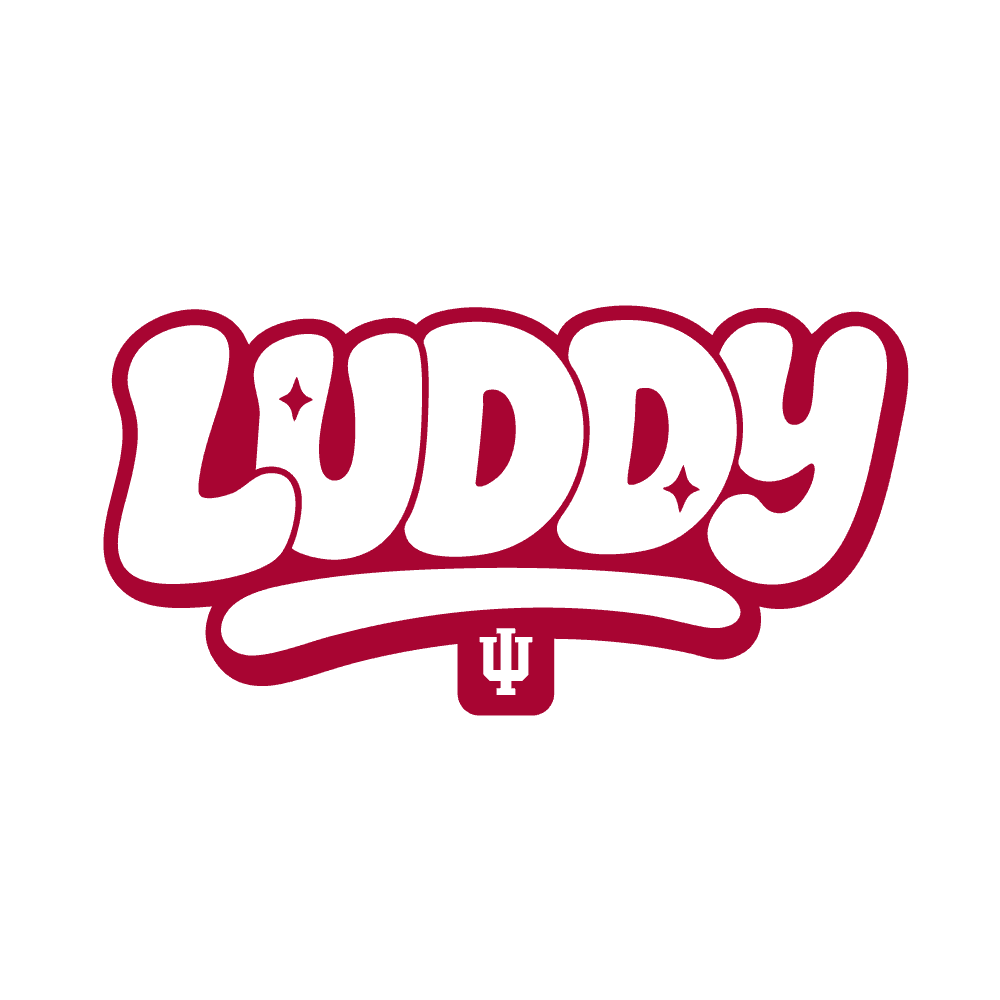
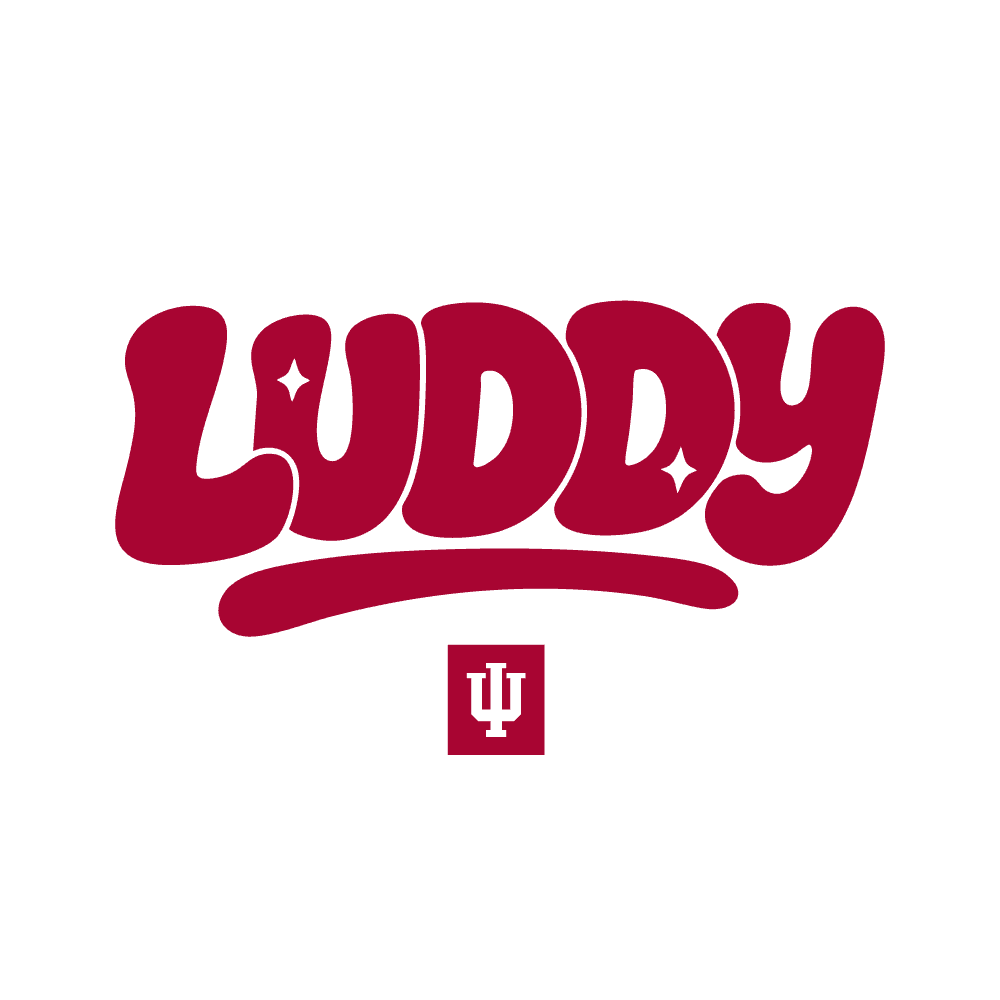
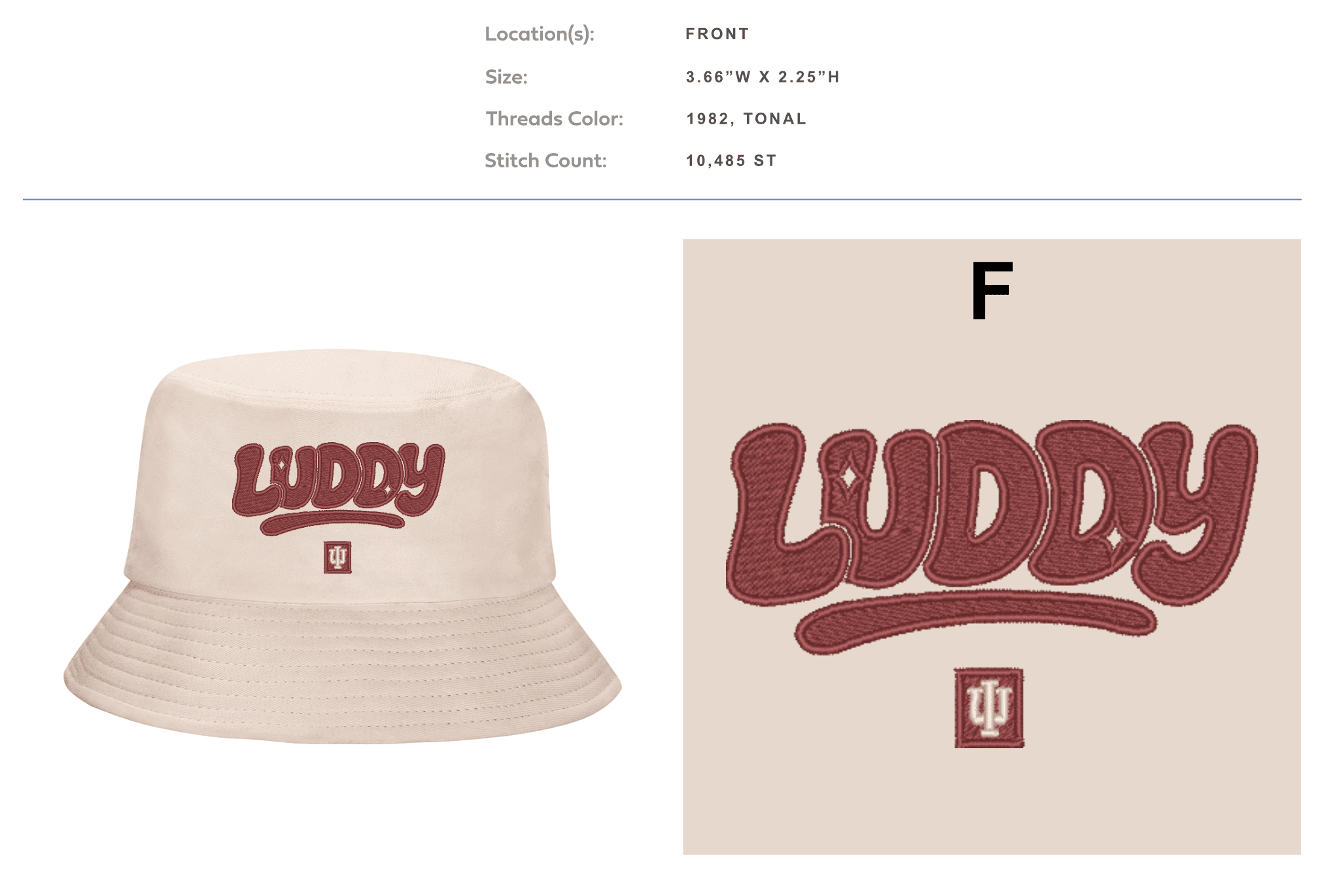
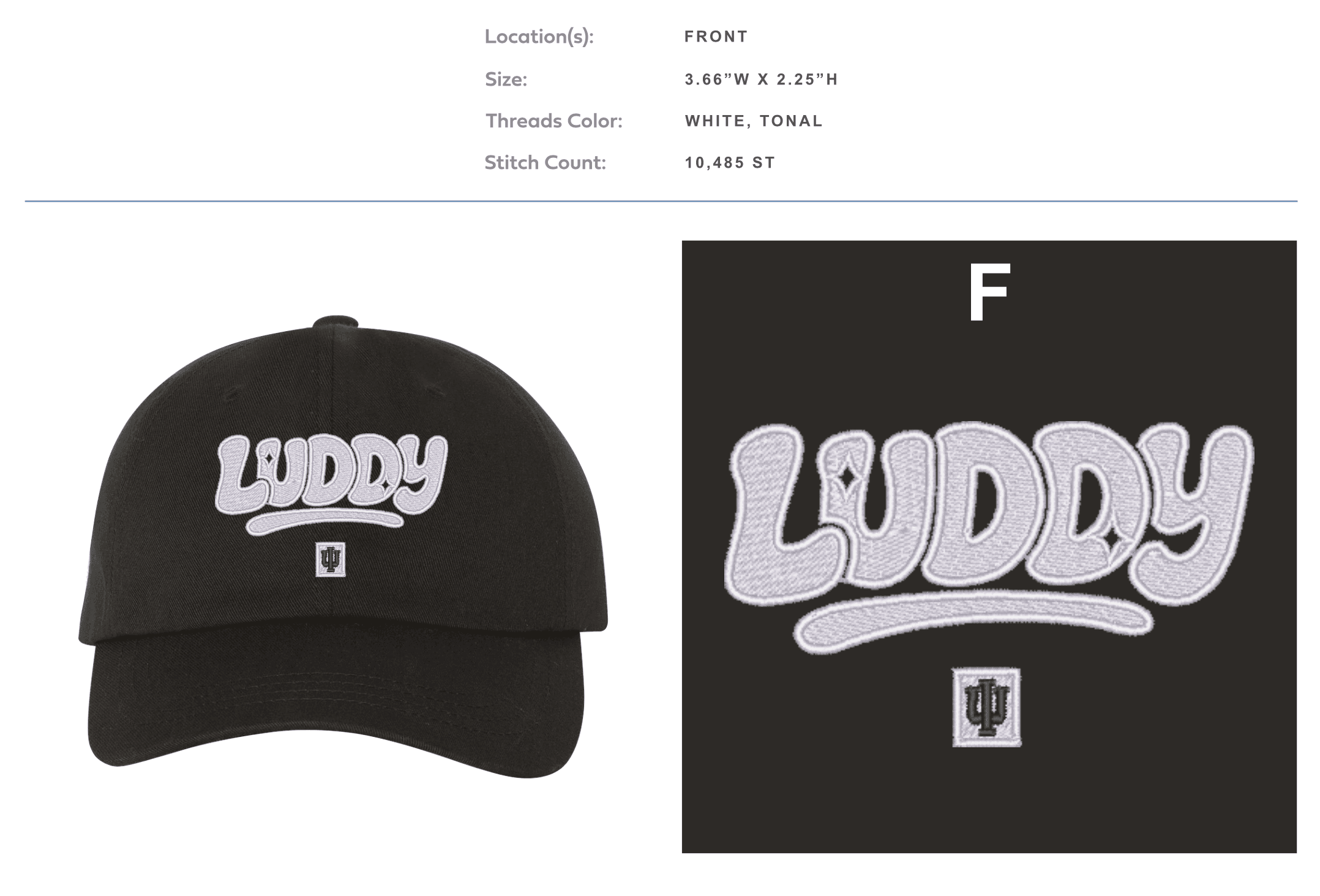
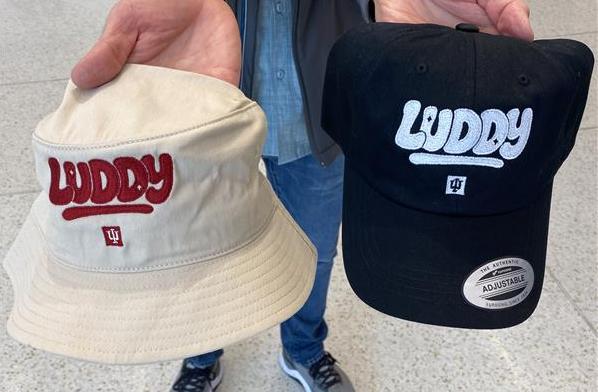
I created a custom bubble letter logotype that captures Luddy’s energetic and approachable identity. The goal was to design a mark that feels expressive enough for student merch while still recognizable as part of the school’s brand.
System Approach:
The logo was refined through multiple variations outline, filled, and tonal versions and prepared as embroidery ready vectors with consistent curves, stroke rhythm, and typographic balance. Thread color options and stitch details were tested to ensure visibility across different fabric colors.
Outcome:
The hats were produced and distributed at campus events, quickly becoming highly requested items among students. They expanded Luddy’s visual identity into a tangible touchpoint that students proudly wear in daily life.
Design and Final Products👇


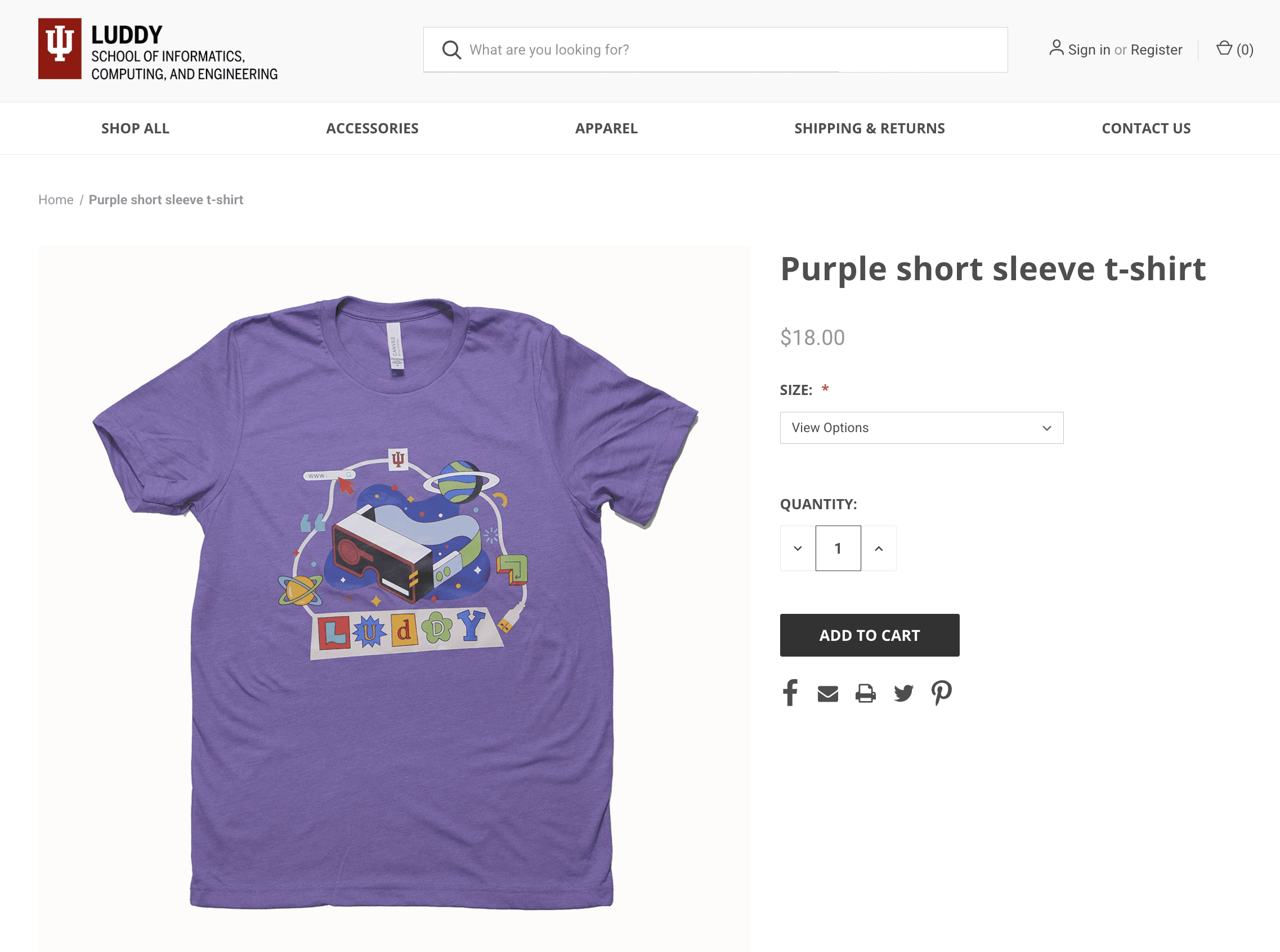
👕 Luddy T-Shirt
Bringing Luddy’s playful visual identity into apparel students actually want to wear
Concept:
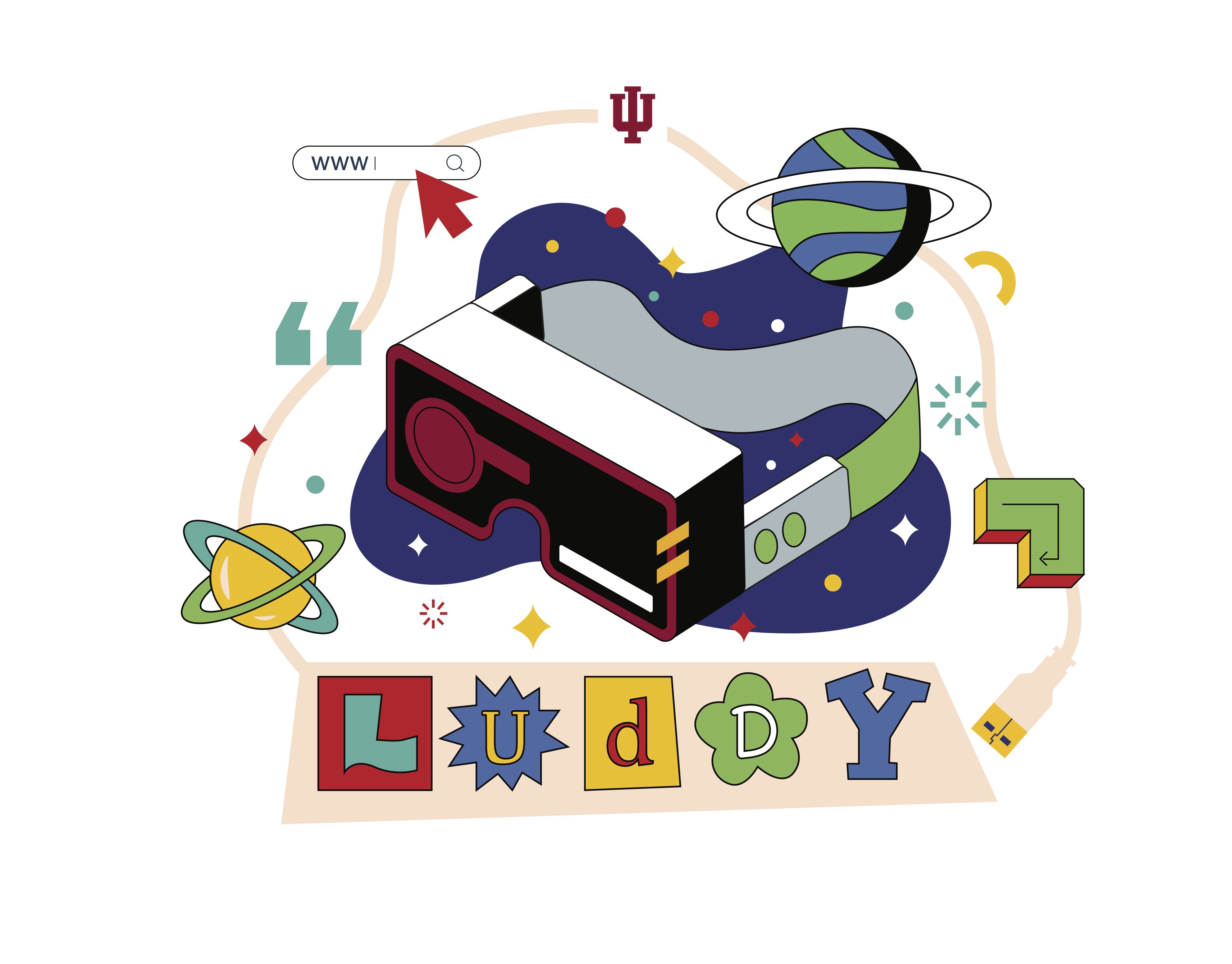
This T-shirt illustration celebrates Luddy’s mix of technology, creativity, and exploration. I combined a VR headset, planetary elements, UI fragments, and modular letterforms to express how students navigate digital and physical worlds at Luddy.
From Artwork to Production:
I built the composition to feel energetic and immersive, balancing large focal elements with smaller icons to create movement. The final vector artwork was adapted to screen printing and produced as official Luddy merchandise.
Outcome:
The shirt launched through the Luddy store and quickly became a popular item among students, especially during events and orientation.
Design and Final Products👇